
 The food truck industry has exploded in popularity over the last decade. With lower startup costs than traditional restaurants, flexible locations, and growing customer demand for street food and quick-service meals, food trucks look like the perfect business opportunity. However, while the model is attractive, many first-time food truck owners underestimate the challenges involved.
Every year, promising businesses struggle or shut down not because the idea was bad, but because of avoidable mistakes. Understanding these common pitfalls can save time, money, and frustration, and can set new entrepreneurs on the path to long-term success.
Below are the most common mistakes new food truck owners make, along with practical insights on how to avoid them.
1. Starting Without Proper Research
One of the biggest mistakes new food truck owners make is jumping in without thorough market research. Many people assume that if food tastes good, customers will automatically come. In reality, success depends on understanding:
- Target customers
- Popular food trends
- Competitor pricing and menus
- High-footfall locations
Without research, owners may choose the wrong menu, wrong pricing, or wrong location. Successful food Businesses are built on data, not just passion.
2. Underestimating Total Startup Costs
Food trucks are often marketed as “low-cost businesses,” but many new owners underestimate the real expenses. Beyond the truck itself, costs include:
- Kitchen equipment
- Licenses and permits
- Branding and truck design
- Initial inventory
- Staff salaries
- Fuel and maintenance
Failing to plan finances properly can lead to cash flow problems early on. Structured solutions like Big Success Family (BSF) Food Trucks help reduce this risk by offering complete, transparent business packages instead of scattered expenses.
 3. Ignoring Legal and Licensing Requirements
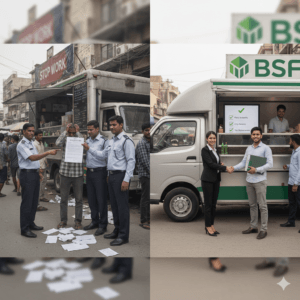 3. Ignoring Legal and Licensing Requirements
Many new food truck owners delay or overlook legal requirements, assuming they can “figure it out later.” This is a serious mistake. Operating without proper permissions can result in heavy fines or shutdowns.
This businesses typically require:
- Food authority approvals
- Municipal permissions
- Vehicle fitness and registration
- Tax and business registrations
BSF Food Trucks stand out by assisting partners with licensing, legal guidance, and documentation, making the startup process smoother and safer for beginners.
4. Poor Location Strategy
Location is everything in the food truck business. New owners often choose locations based on personal preference rather than customer traffic. Parking in low-visibility or low-footfall areas leads to poor sales, no matter how good the food is.
Successful food truck operators continuously analyze:
- Office areas
- Universities
- Events and festivals
- Commercial zones
BSF-trained food truck partners receive guidance on location planning and operational strategy, helping them avoid this costly mistake.
5. Overcomplicating the Menu
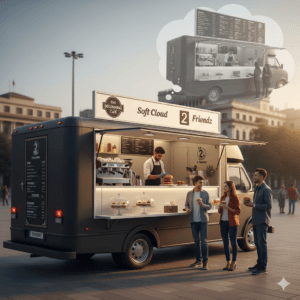 5. Overcomplicating the Menu
Many first-time food truck owners try to serve too many items. A large menu increases costs, preparation time, and waste. It also slows down service, which is deadly in a fast-paced food truck environment.
The most successful food trucks focus on a small, signature menu that is easy to prepare and consistently delicious.
BSF food truck brands like The Beginning Café, Soft Cloud, and 2 Friendz are built around clear, focused concepts ; coffee, desserts, and fast food rather than trying to do everything at once.
6. Weak Branding and Presentation
A food truck is not just about food it’s a moving brand. New owners often ignore branding, using plain designs and unclear menus. This makes it hard to stand out in crowded markets.
Strong branding includes:
- Eye-catching truck design
- Clear brand message
- Social media presence
- Professional packaging
BSF Food Trucks provide complete branding support, ensuring each truck looks professional, recognizable, and market-ready from day one.
7. Poor Inventory and Cost Management
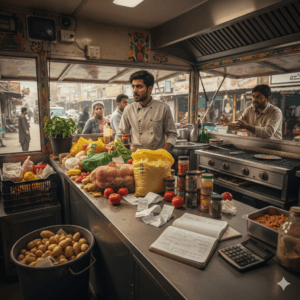 7. Poor Inventory and Cost Management
New food truck owners often struggle with inventory control. Ordering too much leads to waste, while ordering too little causes missed sales. Similarly, failing to track daily expenses and profits makes it impossible to measure performance.
Proper systems for inventory, costing, and daily reporting are essential. BSF helps partners understand basic business management, not just cooking, which is why many first-time entrepreneurs succeed under its model.
8. Lack of Consistency
Inconsistent taste, portion sizes, or service quality is a silent business killer. Customers may forgive a bad day once but not repeatedly. New owners often fail to standardize recipes and processes.
Established food truck systems like BSF focus heavily on standard operating procedures (SOPs) to maintain consistency across all locations and teams.
9. Neglecting Marketing and Digital Presence
Many new food truck owners rely only on walk-in customers. In today’s digital world, this is a major mistake. Customers want to know:
- Where the truck is parked
- What’s on the menu
- Prices and timings
Social media marketing is no longer optional. BSF food truck brands actively use digital marketing and content strategies to attract and retain customers.
10. Trying to Do Everything Alone
Finally, many new food truck owners fail because they try to manage everything themselves cooking, marketing, accounting, and operations. This leads to burnout and poor decision-making.
Partnering with a structured platform like Big Success Family (BSF) allows entrepreneurs to focus on execution while receiving support in training, planning, and operations.
FAQ’s:
1. Is a food truck business profitable for beginners?
Yes, if planned properly. With the right menu, location, and cost control, food trucks can be highly profitable.
2. What is the biggest mistake first-time food truck owners make?
Lack of planning and underestimating costs are the most common mistakes.
3. How does BSF help new food truck owners?
BSF provides training, licensing support, branding, and ready-made food truck concepts.
4. Do I need prior restaurant experience to run a food truck?
Not necessarily. Structured platforms like BSF are designed for beginners with no prior experience.
5. How important is branding for a food truck?
Extremely important. A strong brand helps attract customers and build trust quickly.
6. What are BSF’s food truck brands?
BSF operates multiple food truck concepts including The Beginning Café, Soft Cloud, and 2 Friendz.
Final Thoughts
Starting a food truck can be an exciting and rewarding journey but only if done the right way. Most failures happen not because the idea was weak, but because of avoidable mistakes like poor planning, weak branding, and lack of professional support.
By learning from these common errors and choosing structured business models like Big Success Family (BSF) Food Trucks, new entrepreneurs can significantly increase their chances of success. With the right guidance, it is not just a small business it can be the foundation of a long-term entrepreneurial career.