
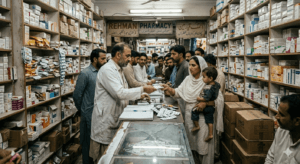
 Pakistan’s pharmacy sector is one of the most essential parts of the healthcare system. Every day, millions of people rely on pharmacies for medicines, medical advice, and emergency support. However, despite this importance, the sector remains underregulated, outdated, and inconsistent. As a result, consumer safety, medicine authenticity, and service quality are often compromised.
In many areas, pharmacies still operate on old systems with little oversight. Consequently, patients face risks that should not exist in a modern healthcare environment. This blog explores the major drawbacks of traditional pharmacies in Pakistan and explains how modern models like Big Success Family and Medizin aim to build a safer and more transparent ecosystem.
Why Is Pakistan’s Pharmacy Sector Struggling?
Although pharmacies are everywhere, their internal systems are rarely standardized. Therefore, structural weaknesses continue to affect millions of lives.
1. Lack of Trained & Certified Staff
Firstly, one of the biggest problems is the absence of qualified pharmacists. In many local pharmacies, untrained workers handle prescriptions and medicine dispensing. As a result:
- Dosage guidance is often incorrect
- Drug interactions are ignored
- Prescriptions may be misread
- No proper medical counselling is provided
This is especially dangerous for patients with chronic illnesses who require careful monitoring.
 2. Sale of Fake, Substandard & Smuggled Medicines
 2. Sale of Fake, Substandard & Smuggled Medicines
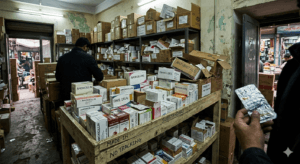
Secondly, counterfeit and substandard medicines remain a serious threat. Due to weak monitoring systems, fake products easily enter the supply chain. In addition:
- Unregulated wholesalers operate freely
- Serial tracking is often missing
- Storage standards are ignored
When profit becomes the priority instead of patient safety, the entire system weakens.
3. Poor Storage & Temperature Control
Moreover, many medicines such as insulin, vaccines, and certain antibiotics require strict temperature control between 2°C–8°C. However, most small pharmacies lack:
- Certified cold-chain refrigerators
- Backup generators
- Temperature monitoring logs
Therefore, medicines may lose effectiveness without customers even realizing it.
4. No Digital Records or Transparency
In today’s digital era, many pharmacies still depend on manual registers and outdated billing systems. Consequently, this leads to:
- Stock shortages
- Expired medicine sales
- Price manipulation
- No accountability
Without digital tracking, transparency becomes almost impossible.
5. Profit-Driven Practices Instead of Patient Care
Furthermore, many pharmacies operate purely as retail shops. Instead of focusing on healthcare, they prioritize high-margin products. For example:
- Unnecessary supplements are pushed
- Safety guidelines are overlooked
- Follow-up counselling is rarely offered
As a result, healthcare turns into business rather than service.
 6. Lack of Standard Operating Procedures (SOPs)
 6. Lack of Standard Operating Procedures (SOPs)
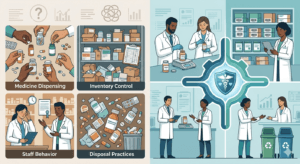
Additionally, there are no uniform operating procedures across pharmacies. Since audits and training are rare, every store follows its own methods. This creates inconsistency in:
- Medicine dispensing
- Inventory control
- Staff behavior
- Disposal practices
Healthcare, however, requires strict consistency.
7. Weak Supply Chain Structure
Another major issue is the multi-layered supply chain. Typically, medicines pass through:
- Distributors
- Sub-distributors
- Middle dealers
- Retailers
Each additional layer increases costs and risks. Therefore, mishandling and counterfeit entry become more likely.
8. No Proper Complaint System
Equally important, customers have limited options to report fake medicines, overcharging, or poor service. Because complaint mechanisms are weak, accountability remains low.
How Big Success Family & Medizin Are Changing the Game
Amid these challenges, Big Success Family and Medizin introduce a modern, patient-first model designed to transform the pharmacy experience.
1. Professional & Certified Staff
Firstly, they prioritize licensed pharmacists and trained teams. In addition, staff receive education in:
- Drug safety
- Dosage management
- Patient counselling
- Ethical customer care
This ensures safer dispensing every time.
2. 100% Authentic & Traceable Medicines
Secondly, their supply chain focuses on direct sourcing from manufacturers. Therefore:
- Batch tracking becomes possible
- Cold-chain monitoring is ensured
- Middlemen are eliminated
As a result, counterfeit risks are significantly reduced.
3. Digital Transformation
Moreover, technology plays a central role. Their system includes:
- E-billing
- Real-time inventory tracking
- Automated expiry alerts
- Digital records
Consequently, transparency and efficiency improve dramatically.
4. SOP-Based Operations
Unlike traditional pharmacies, every process follows structured Standard Operating Procedures. Therefore, service remains consistent across all branches.
5. Patient-First Services
Most importantly, the focus shifts from profit to patient wellbeing. Services include:
- Free counselling
- Chronic illness guidance
- Follow-up reminders
- 24/7 customer support
Thus, pharmacies become healthcare partners rather than mere sellers.
 Final Thoughts
 Final Thoughts
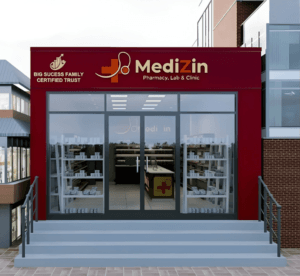
Pakistan’s pharmacy sector does not need minor adjustments; instead, it requires complete transformation. For years, outdated systems and weak regulation have damaged public trust. However, modern initiatives like Big Success Family and Medizin represent a new direction.
They stand for:
✅ Safety
✅ Professionalism
✅ Transparency
✅ Digital systems
✅ Patient-centered care
In conclusion, the old pharmacy culture is slowly fading. Meanwhile, a modern, ethical, and globally aligned pharmacy network is rising; one that finally places patients at the center of healthcare.